Despite its nickname as a “Fat Evo”, what links does the Mitsubishi Airtrek Turbo have with the more desired Lancer Evolution? Apparently, only worse off.
You’re fantasizing about a Japanese symbol of your youth, but prices are through the roof. Looking back down from the top to bottom that is your budget sitting slumped on the ground, you wonder, “What’s in it for me?”
Somehow you don’t want an old-school revver like a Honda Civic, or you’re locked to an automatic licence and don’t want to try relearning the fiddle stick again. Well… the three-pointed star? Anything?
The Mitsubishi Airtrek is a car of its age and slightly beyond – it gained most traction within ten years of its introduction and gripped another ten after discontinuation. But the slip seems like now, where enthusiasm of this turbobarge has vanished, now a bittersweet memory for all looking back with non-tinted glasses – as you might know how lacking it was back in the day.
Or, let’s say you don’t. In short, its a gut-filled enthusiast car that can feel gutless – more accurate breathless even with a turbocharger. There’s things to like, things to not like – its not perfect in short, but it could just be your cup of tea.
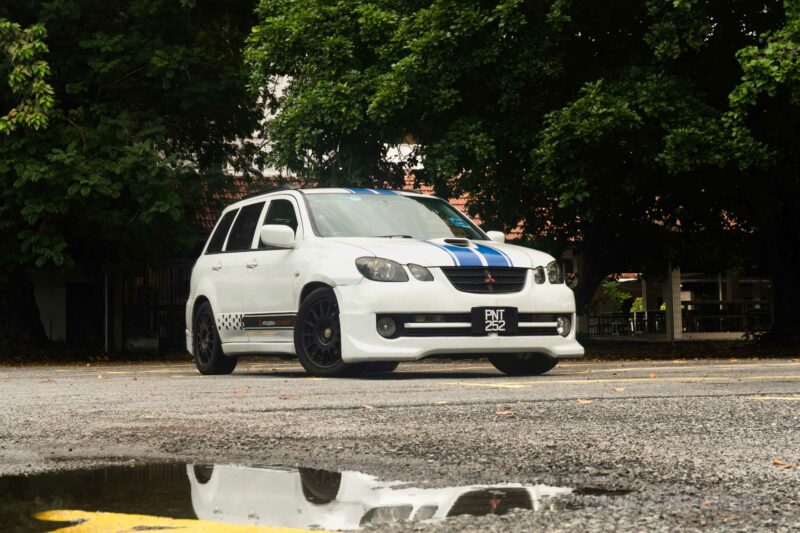
The Airtrek first began production in 2001 and trailed off in 2008, surviving a longer domestic run than the export market Outlander that began and ended in 2003 and 2006 respectively.
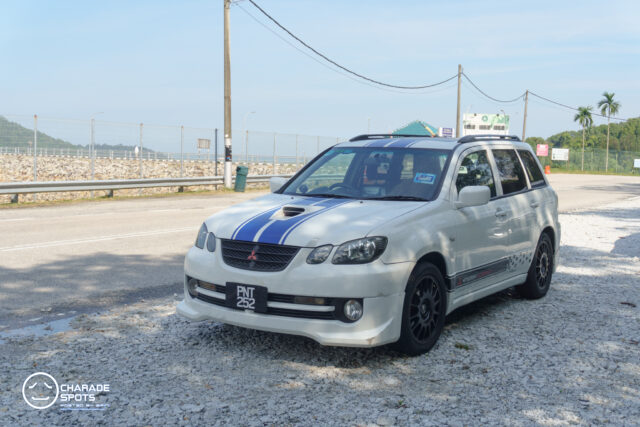
The turbocharged-4G63 variant of Airtrek in Malaysia was sold under United Straits Fuso renamed USF-HICOM (Malaysia). While the chassis CU2W turbo was sold in other markets predominantly as the “Turbo-R”, official Malaysia market Airtreks are named Turbo. Even without the “R”, the trims specified are just as Race-y as those in other markets. This test unit here courtesy of my family, is a Malaysian-market Mitsubishi Airtrek Turbo.
Smart all-rounder
Well, what is it?
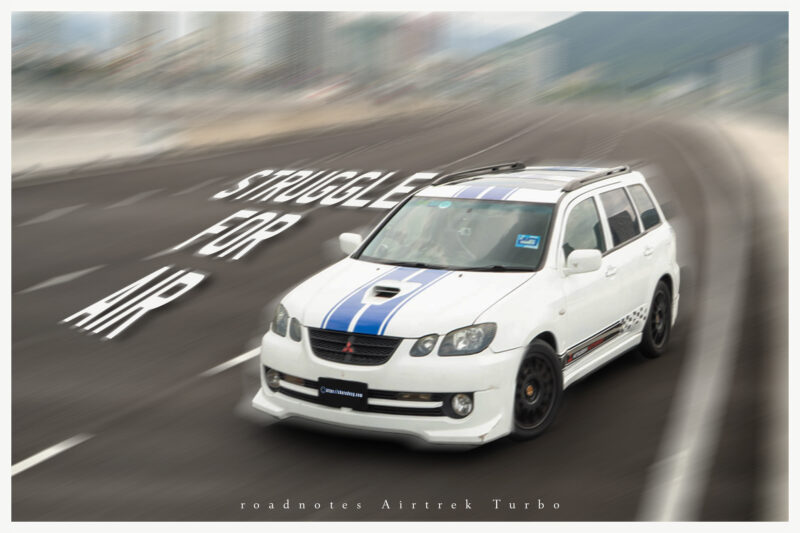
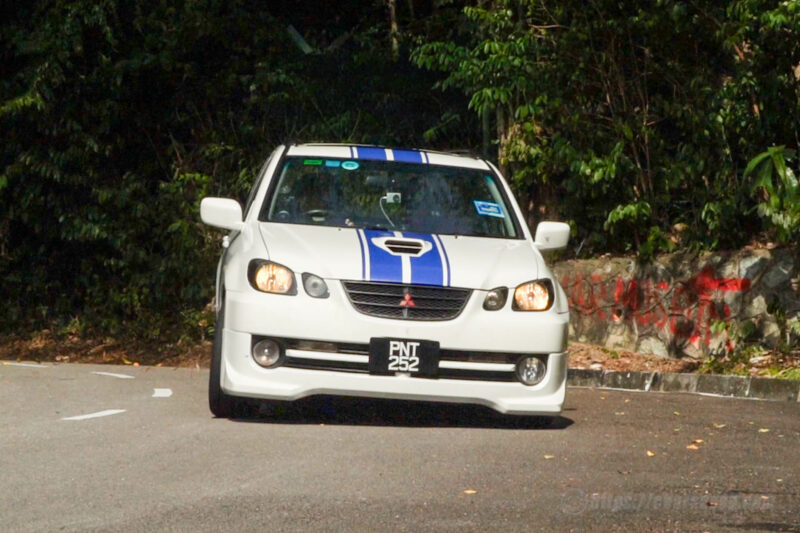
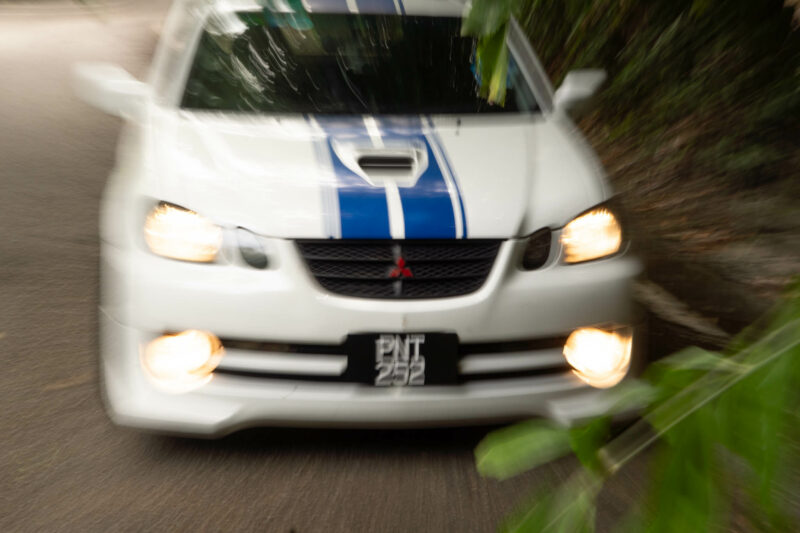
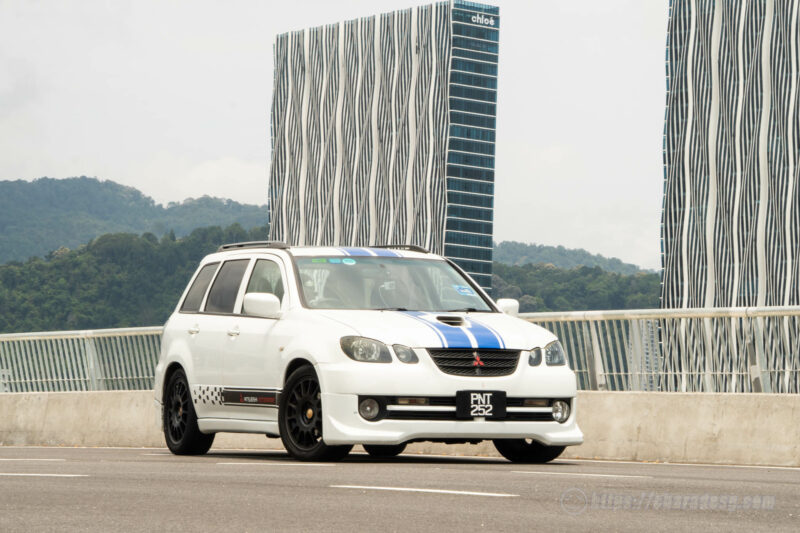
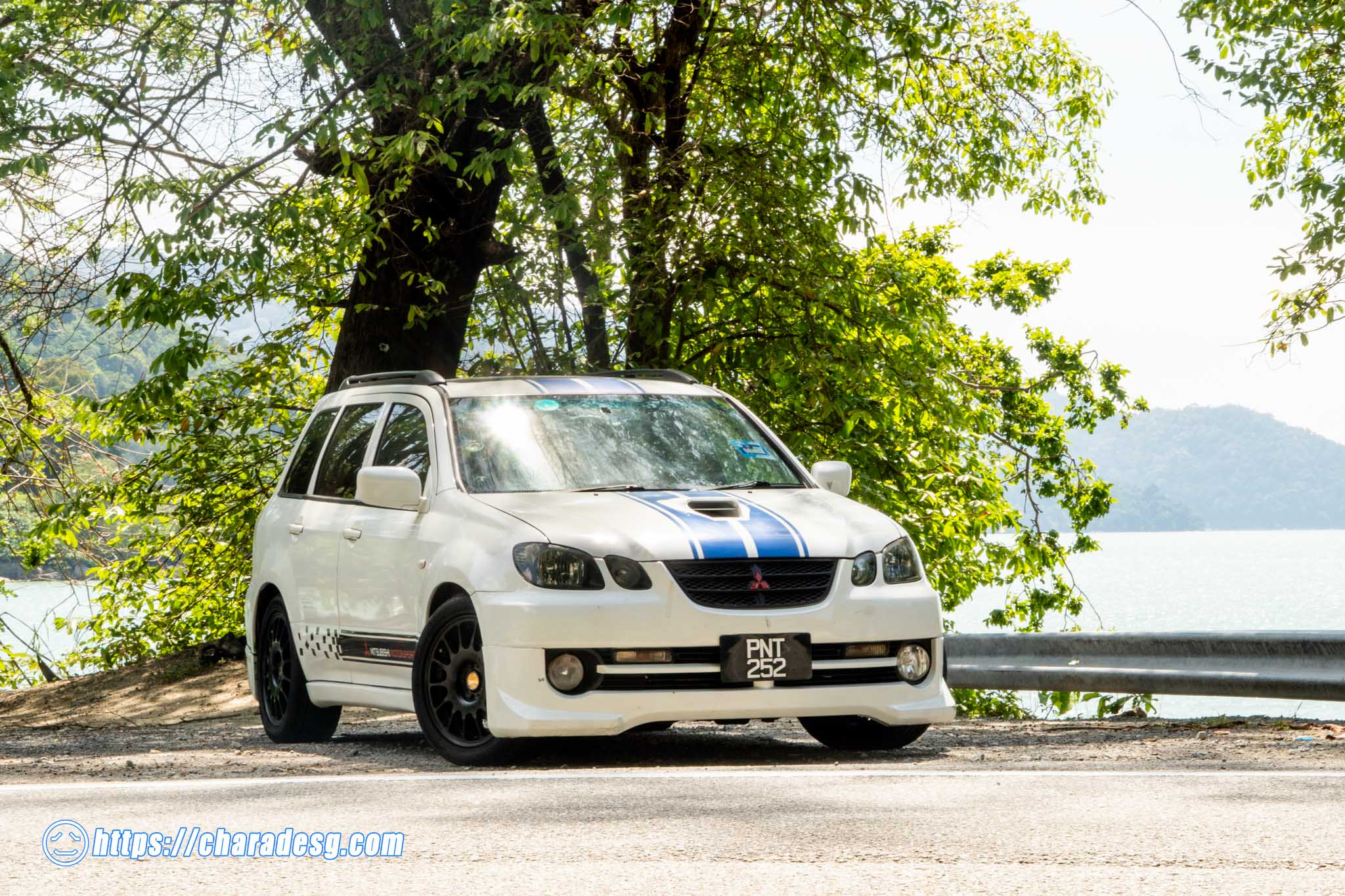
Shoot your first impressions of it – there’s a certain appeal for the cyclops. Its an “to each their own” thing, but people buy new Mitsubishi Attrages, so let’s not get picky. The quad-headlights (which is one single unit) is amplified by two equally-polarizing foglights mounted low, plus a hood scoop – more of a telltale sign that this five-door is something more than your “unker SUV”.
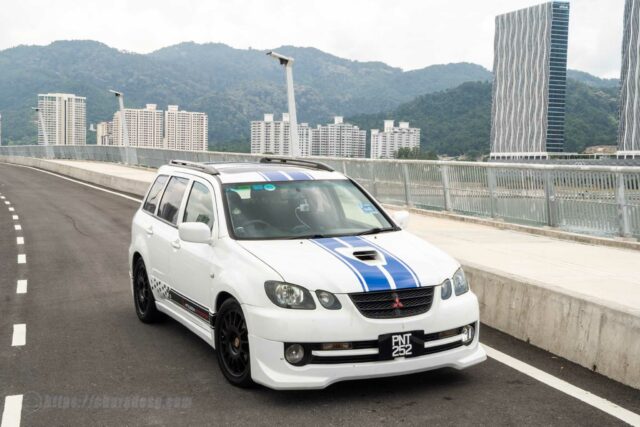
But what is it? Because its body lines scream wagon, yet it is marketed as a compact SUV. Mind you, it is very compact – almost Perodua Myvi compact, at a width of 1,750mm, length 4,465mm, height 1,540mm and wheelbase of 2,625mm. It proved far smaller than its contemporary rivals back in Japan – Subaru Forester and Nissan X-Trail.
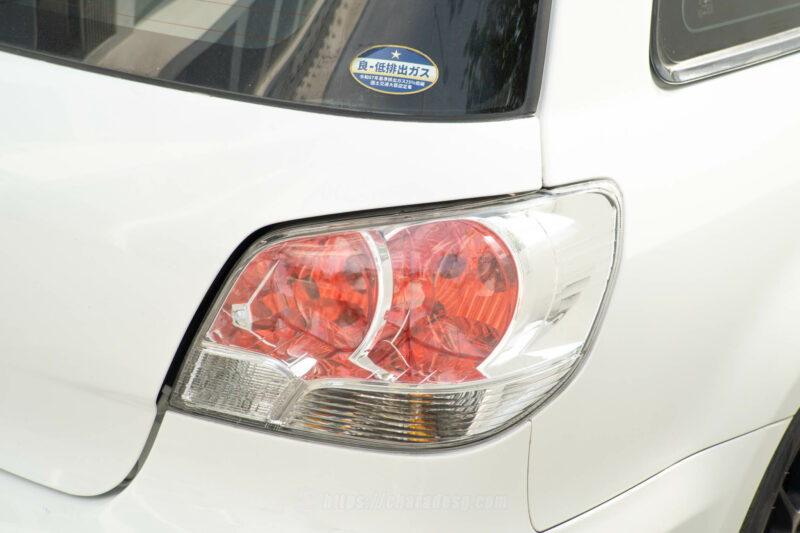
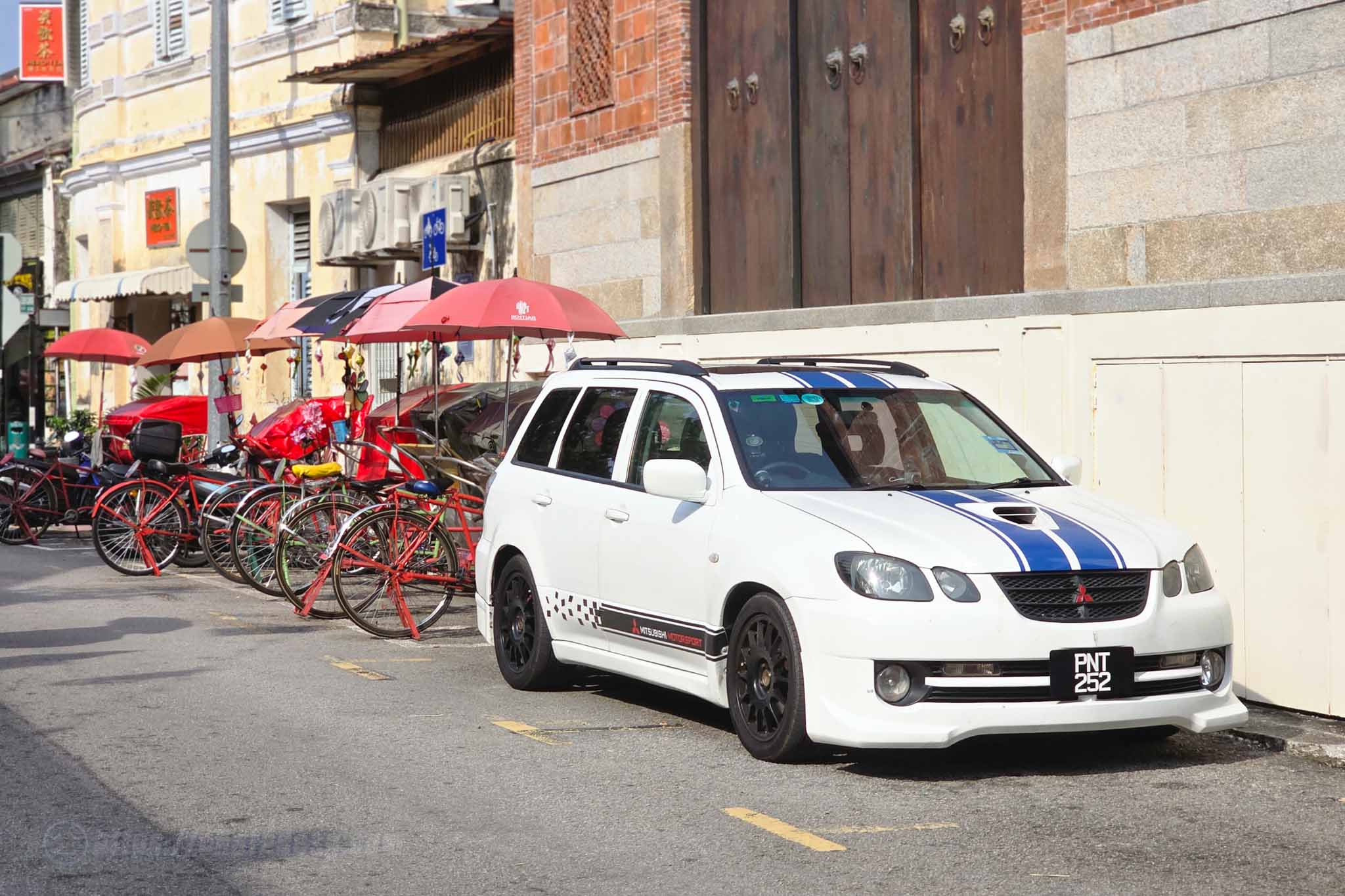
The rear comes forth with angular and aggressively-shaped taillights condensed into a single unit. Different model years vary with design, where this test unit is pre-fitted with clear factory taillights and 2005 trunk. If the normal aesthetics wasn’t enough for you, RALLIART front and rear bumper lips and sideskirts as seen on this test car is an option from Japanese units or locally reproduced – though loose gravel would be more painful driving through with the lower clearance.
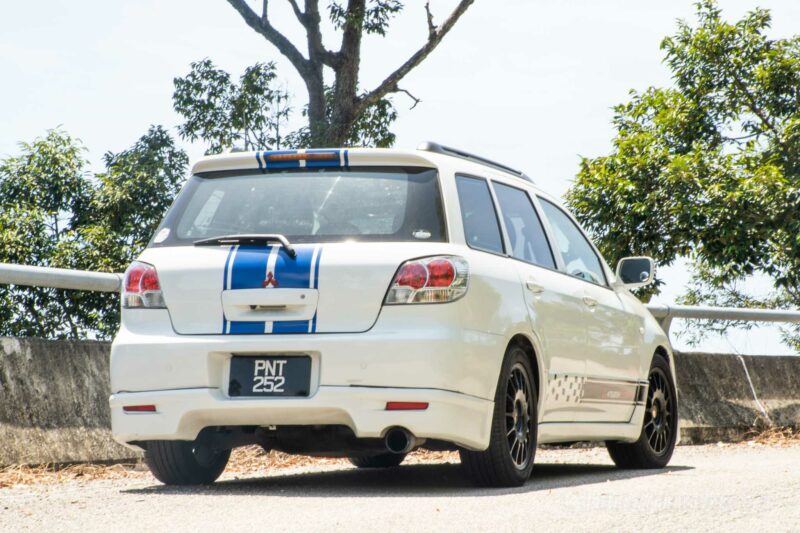
In any case, the Airtrek Turbo has an appearance that woos both ends of the relationship – for the guy is it macho-heavy and very gangster, and for the gal is it… an SUV.
Emotional spo(r)t
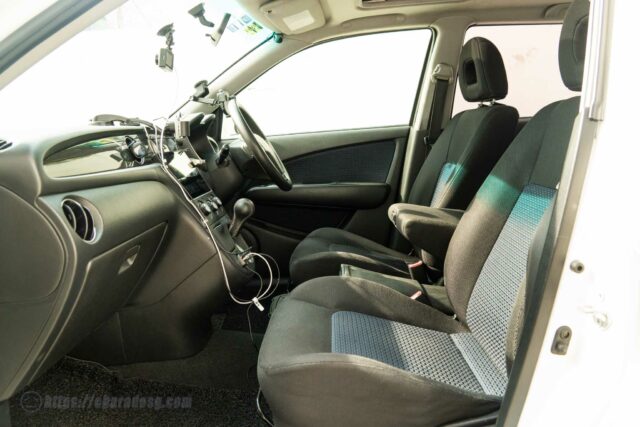
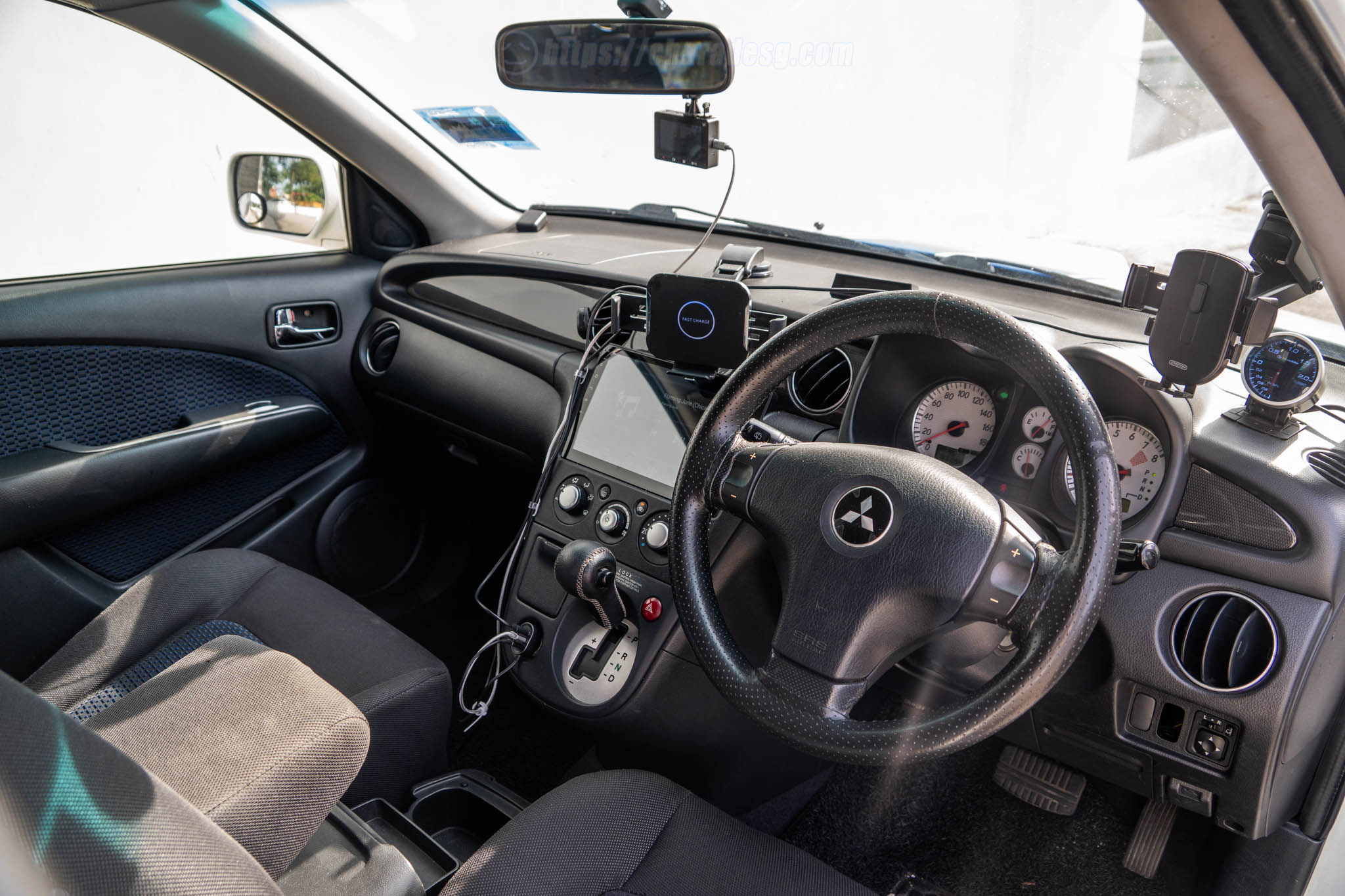
The interior of the Airtrek Turbo is spartan although well-equipped. At an outside glance, the Airtrek Turbo is the bare basics offered that a people carrier needs – commendable space, an airy cabin and seating four (seatbelts). On the inside, there are subtle details that the Airtrek Turbo has that makes it slightly more than a normal car with a not-normal exterior.
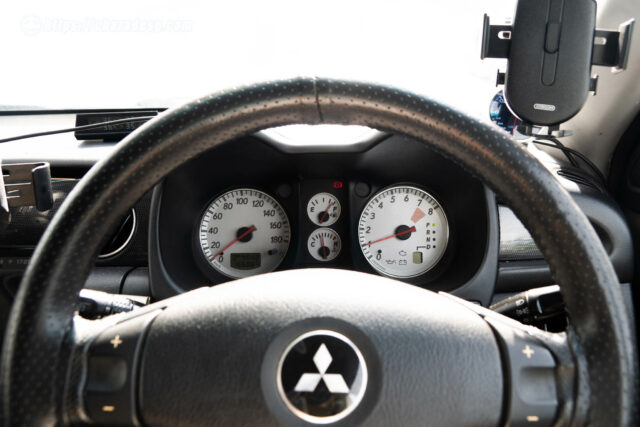
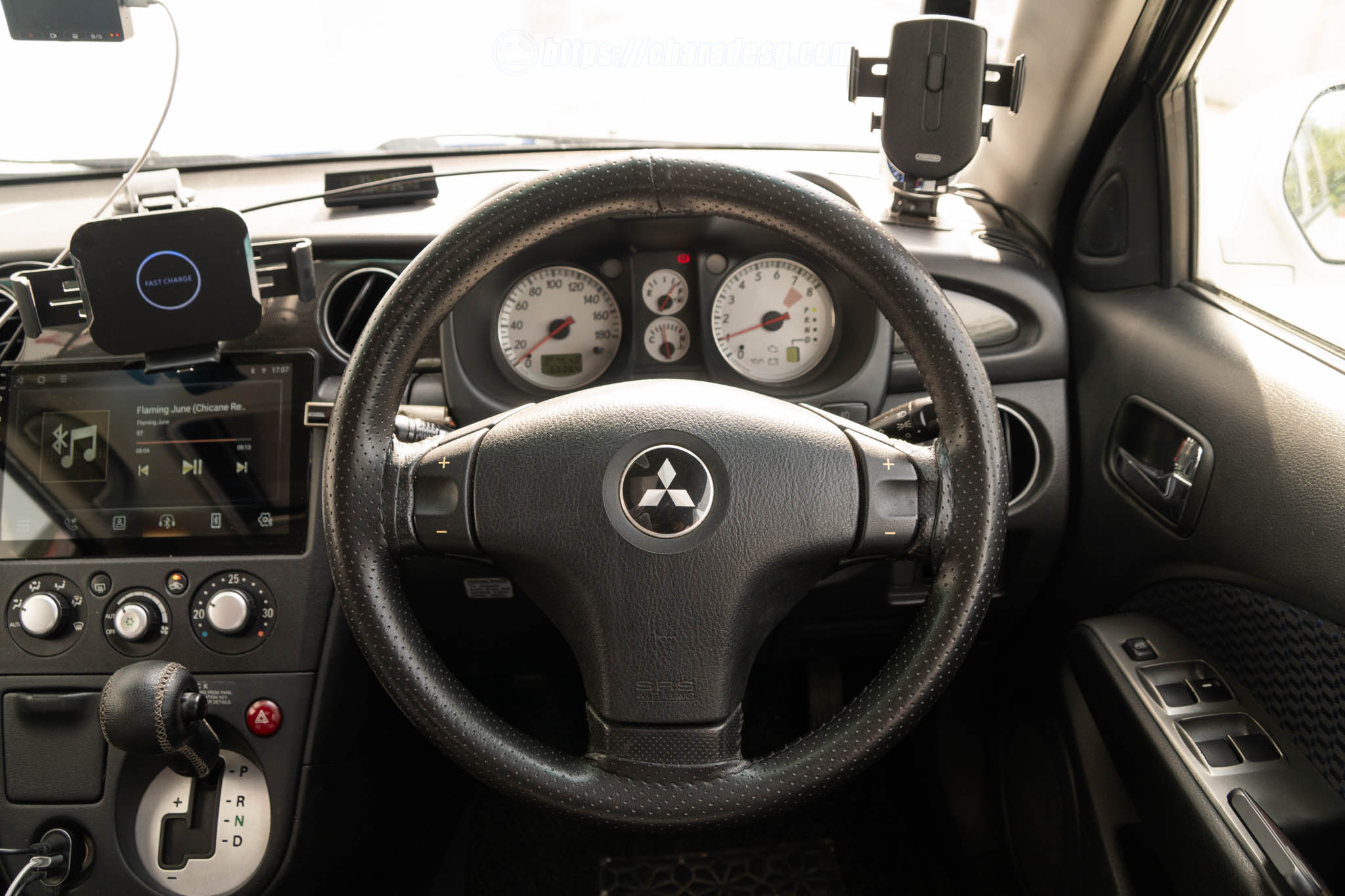
Starters, the steering wheel is a sporty three-spoke set with spoke-mounted shift buttons. Peek at the 2000s-heavy dash-mounted shifter and there’s a manual override. Other peppy details (although no crowd pleaser) is the carbon dashboard trim and white-face gauges.
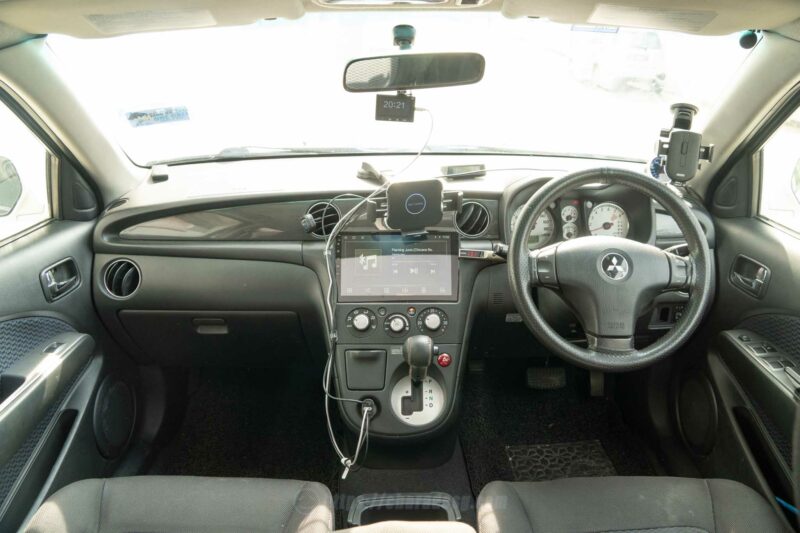
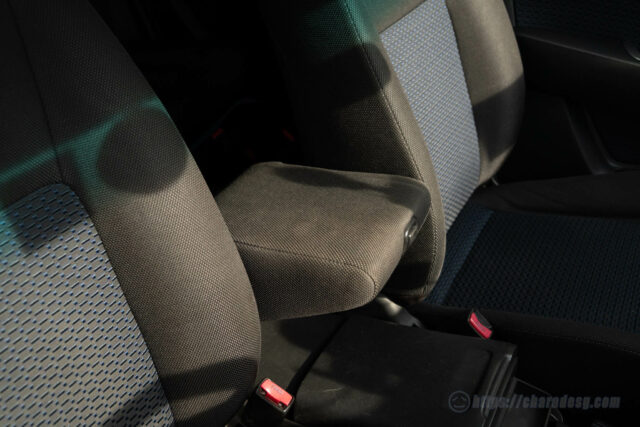
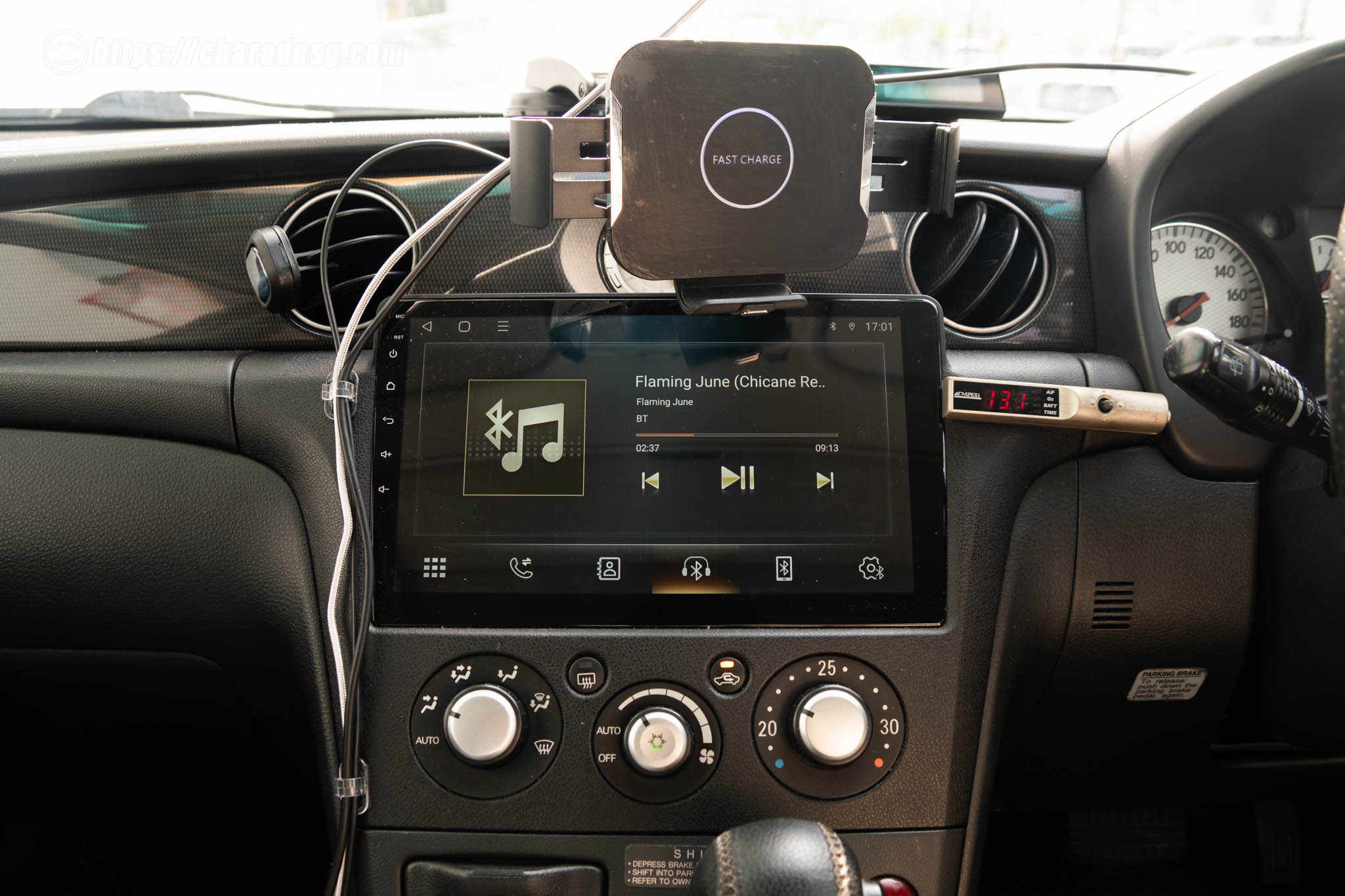
The Alfa-esque front air vents are fully rotatable from closed to blowing Antarctica at any occupants, although rear seating will have to make do with typical SEA temperatures without said vents. Climate controls are three perfectly basic and readable knobs with clear labeling, and a center armrest that can be rotated away from use or to use with different heights. There isn’t too much gimmicks or too little substance that the Airtrek sits squarely in the neutral zone.
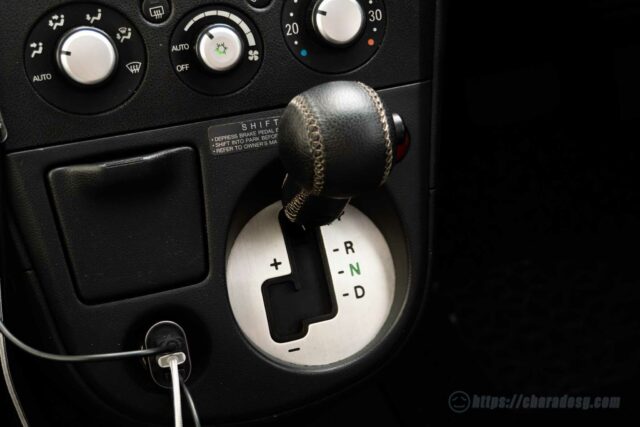
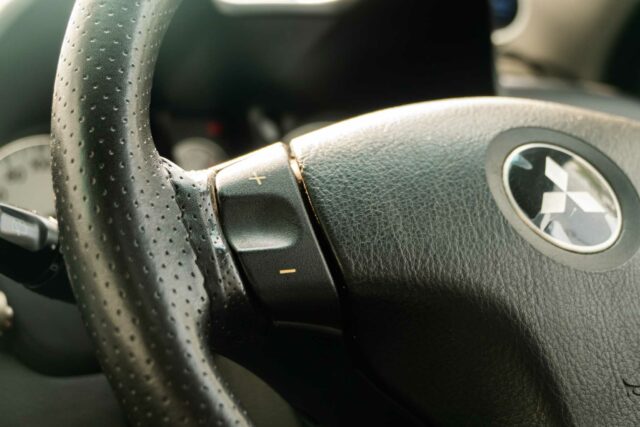
The screen in this test car is an aftermarket player that needs an equivalent center piece to fit. It is a common modification in Android-heavy Malaysia.
Look up, too. Dual sunroofs are standard fit and motorized. Opposed to some moonroofs, interior trays exist to shut off excessive sun rays, which the cabin doesn’t need being pretty spacious and airy.
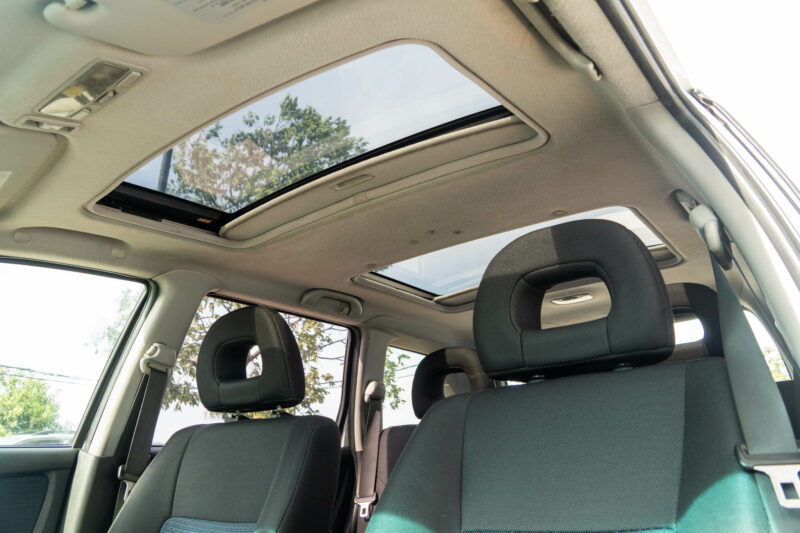
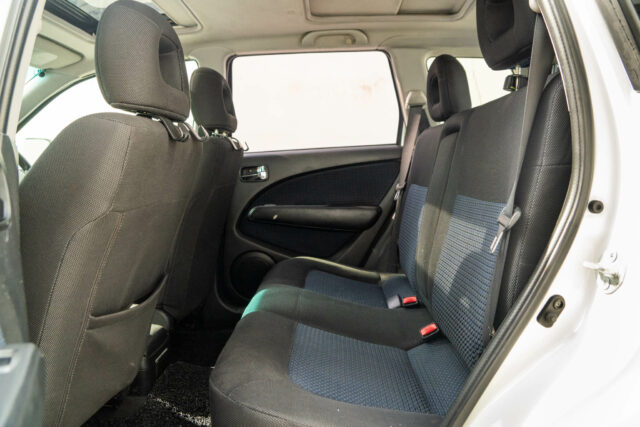
Now, look down. Front leg and headroom is plentiful for taller drivers, although rear occupants may say otherwise for legroom.
In and out remains the best height there is, an easy shuffle that is neither jump nor duck – elderly passengers may find it as the best car to play brave grandparents. Extra favorable is the adjustable angle for the rear seats.
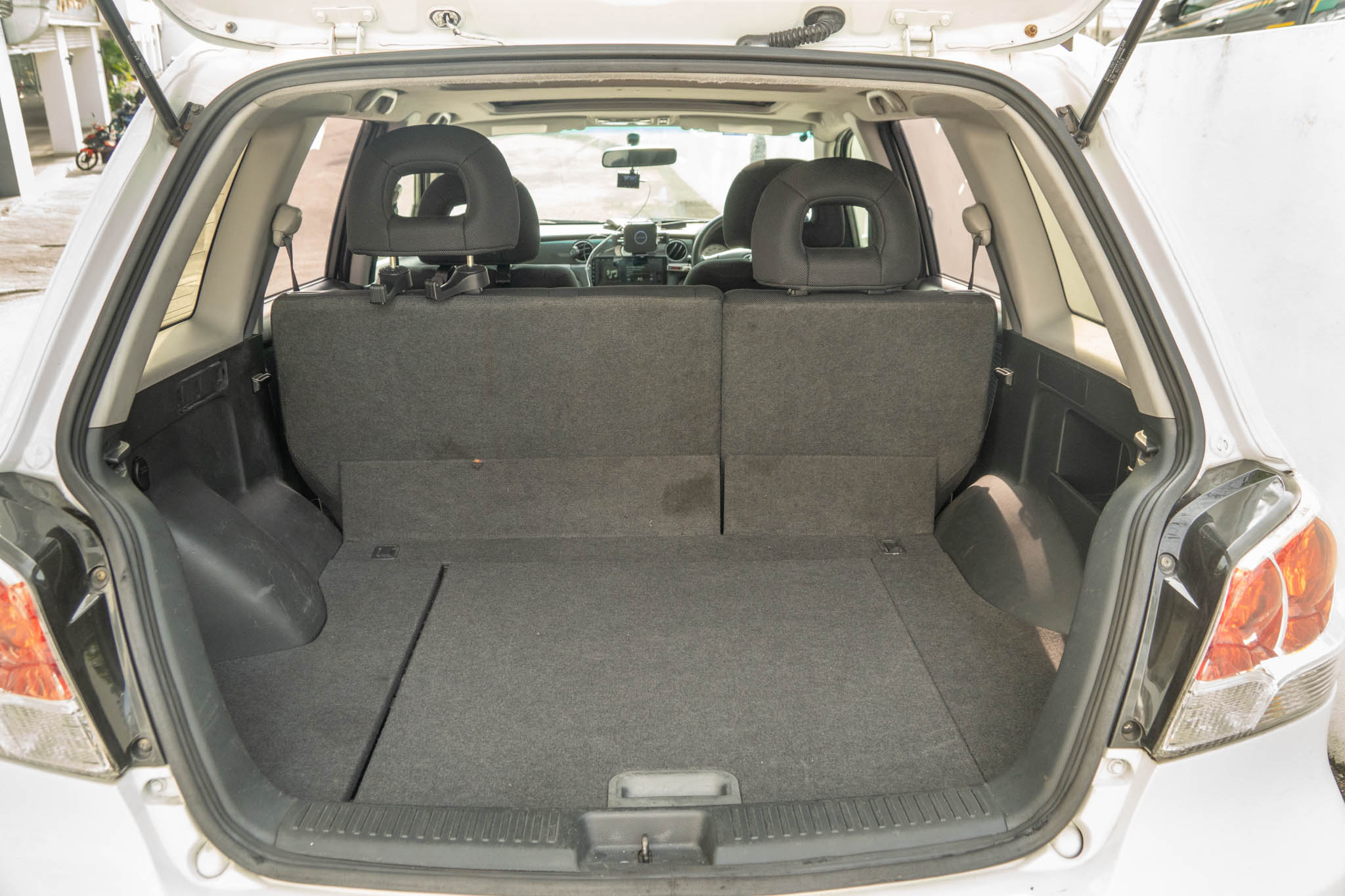
Trunk space is a respectable volume at roughly 402 litres. The wagon shape works in the Airtrek’s favor in this department, with a hungry trunk more than adequate for airport runs without clearance woes.
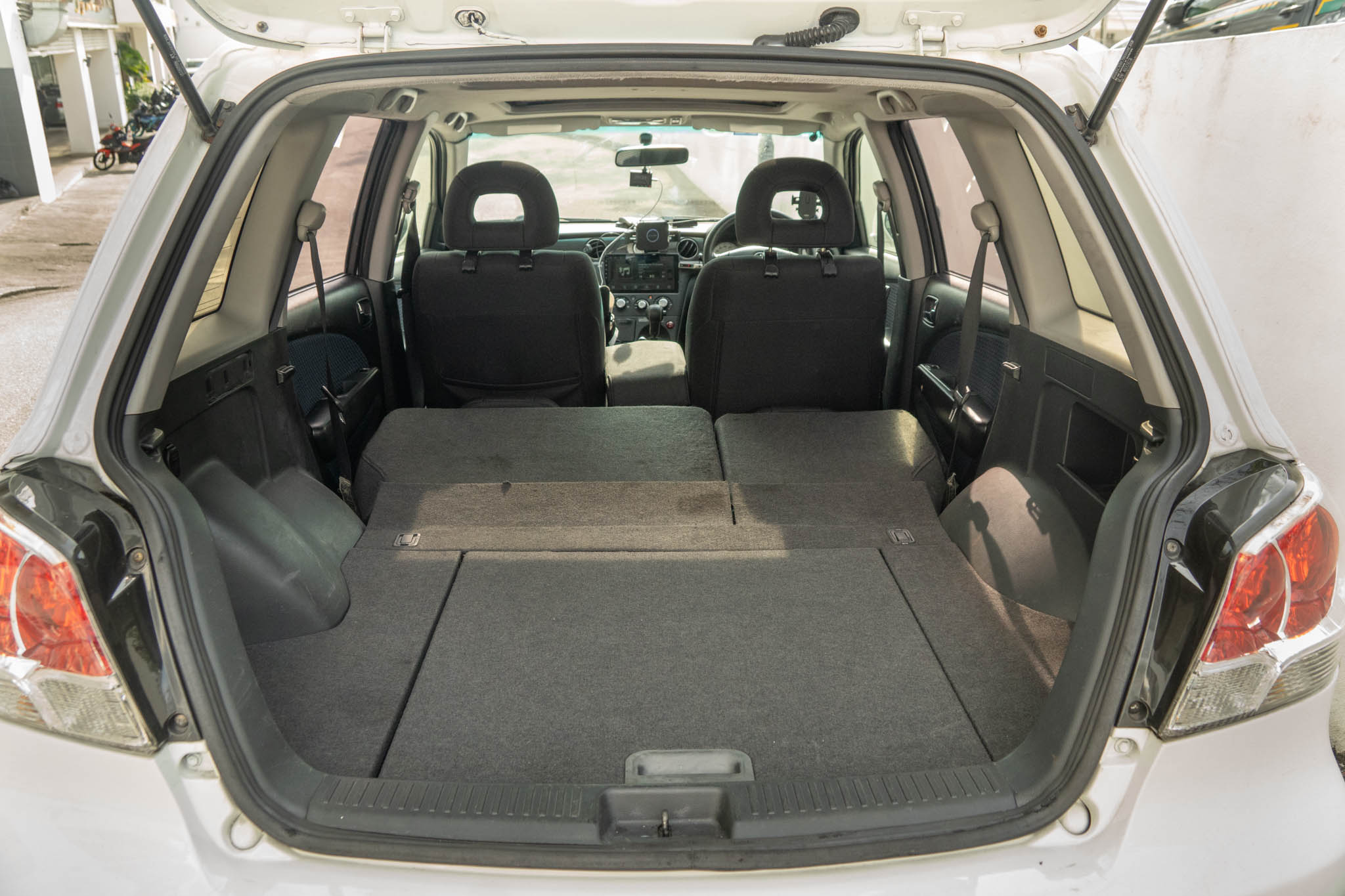
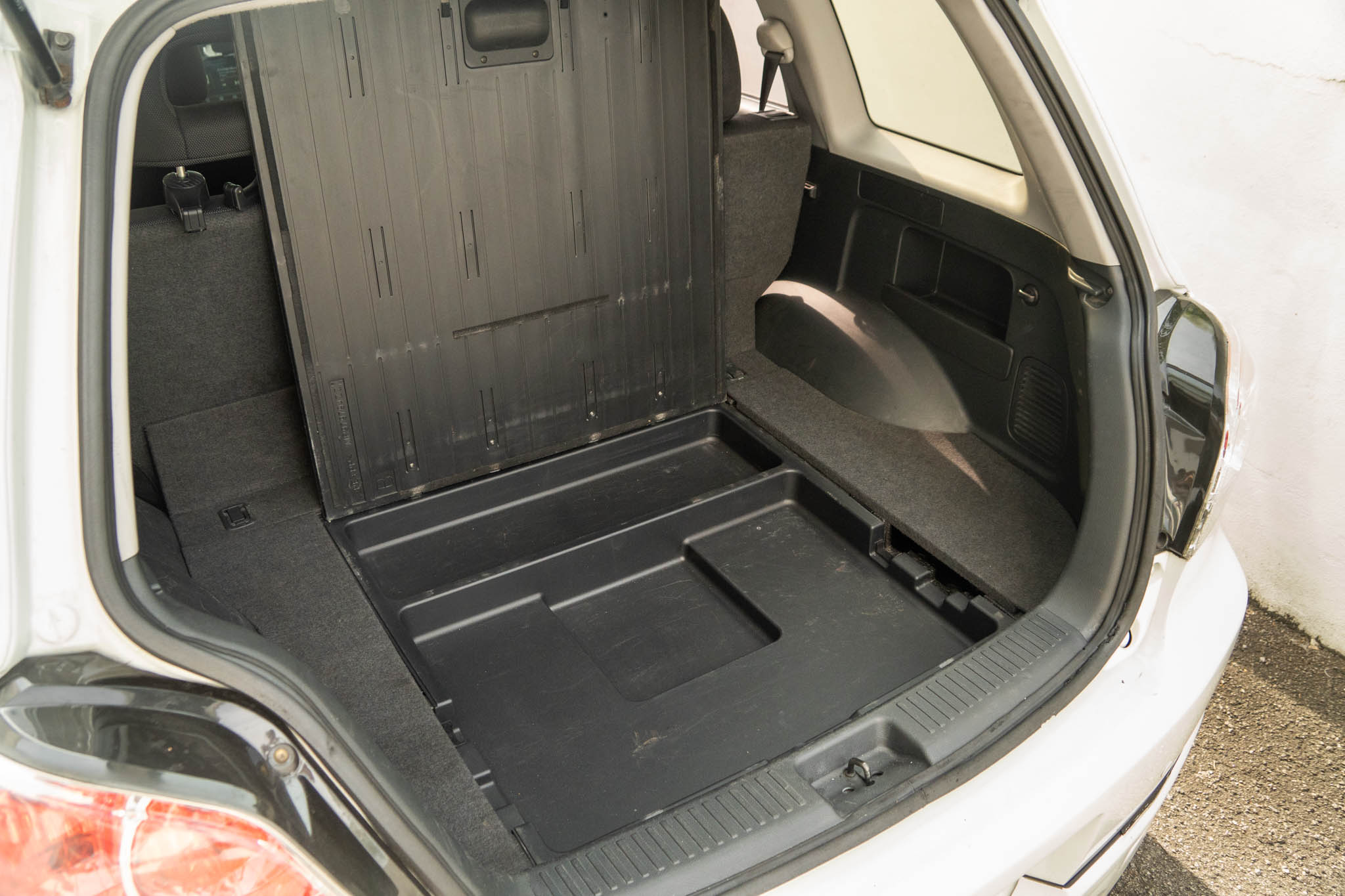
The voluminous boot extends to pushing the rear seats flat, granting up to 1049 litres of boot space, or an entire shelf’s length for reference. A party trick lies underneath the flooring, which opens up to small rectangular cubby spaces – suitable for hiding contraband cigarettes for cross-border excitement.
As an unassuming SUV, the Airtrek Turbo genuinely has good merits as an approachable cabin that doesn’t antagonize the driver or his/her passengers.
G’Ready for spool
You’ve heard it before as a Malaysian or Singaporean. Eh, this Airtrek, is Evo ah! Yes, but also no. I’m sure you would’ve heard from your local kaki or dealership that it shares the same proven Lancer Evolution series for its engine and powertrain, but the Evolution produces somewhere near the tune of 276 horsepower while the Airtrek Turbo makes only 237 of the “same” rally-bred heart.
Let’s open the bonnet first, then I’ll tell you what they don’t normally say.
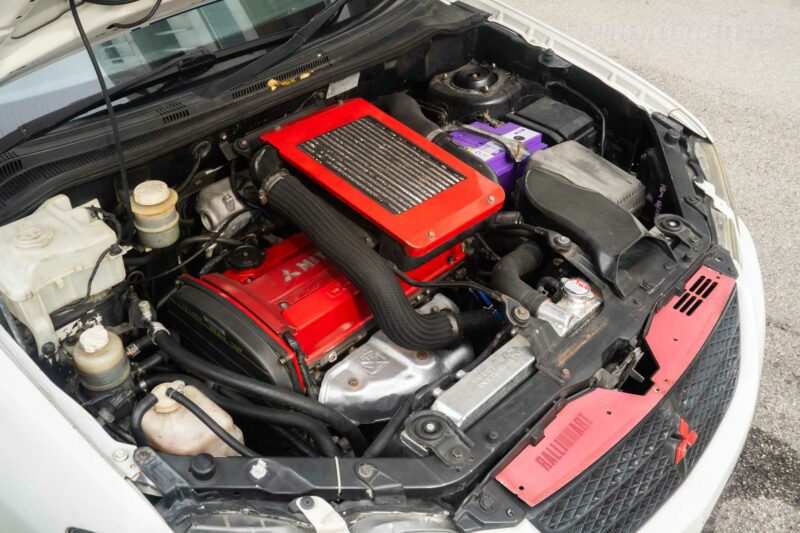
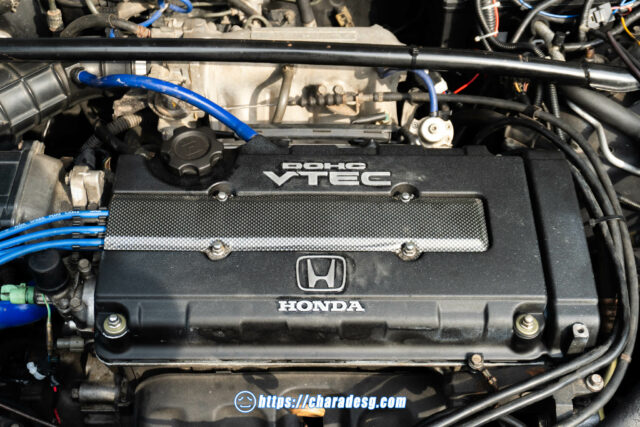
On the surface, its an Evolution motor. Very true, same valve cover with with an interesting top-mount intercooler – amongst the only application of a top-mount in the 2-litre 4G63T four-cylinder’s life. Some might say the Airtrek Turbo is the Lancer Evolution VII (7) GT-A in SUV form, but that limited run automatic-only saloon was detuned only to 268 horsepower.
Three-pointed star it had but it was no star of the show in Mitsubishi’s showroom – this 4G63T is a “worsened” parts-bin special.
To summarize the basic points, the turbo in the Airtrek is a TD04 instead of the Evolution VII (7)’s TD05 and the engine has overall differing internals shared between the Evolution I, III, V and VII. The part mishmash gives a deficit in performance over the contemporary Lancer Evolution VII.
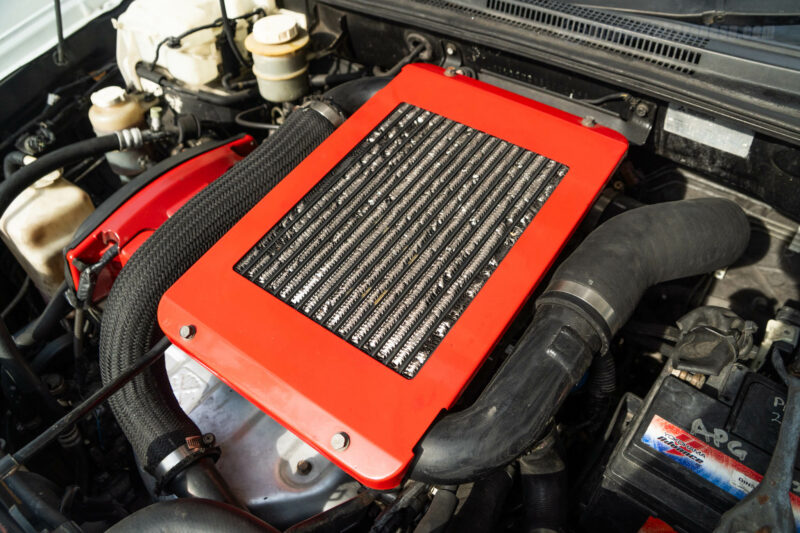
All of those “downgrades” mean the Airtrek Turbo produces 237 horsepower at 5,500 RPM and 343 Nm torque at 2,500 RPM, mated only to a 5-speed automatic “Tiptronic” gearbox, with permanent all-wheel drive. A tidbit worth a thought is the CU2W was technically offered with a manual – the European market Outlander Turbo.
What the drivetrain also lacks is the Evolution’s trickery that is Active-Yaw Control (AYC), so an Evolution will still outpace the performance SUV anywhere.
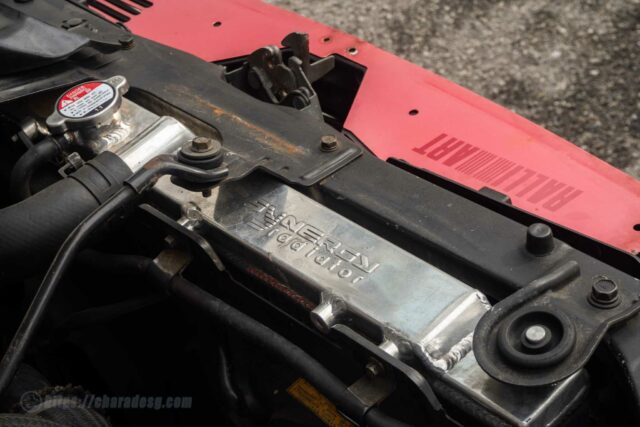
Without the engineering beauty of the Lancer Evolution, it is a compromised affair that on paper makes it “worse” than the actual homologation saloon, but watered down enough that it was an attainable piece that let you play with Mitsubishi’s magic wand without revolutionizing your budget. Weaponize the turbocharger with an aftermarket blow-off valve, and the Airtrek becomes auditory stress relief…
A difficult trek
But the relief of stress ends somewhere here. The Airtrek Turbo has the guts to push, but not nearly the body to push forward. Its akin to having a beer belly but a fiery determination to run… to the nearest fuel station.
Within city environments and stop-start repetition, it is an easygoing affair with light steering and slow creep speed. Interior ergonomics are comfortable and perfected by the center armrest that leaves somewhere to plop your underused arm when puttering around. Opposed to the rugged Evolution, the Airtrek Turbo is one that is suited for simple motoring.
The drivetrain, however, is just that – easygoing. Low-down torque is non-existent unlike the zippy torque-band found in that Evolution VII GT-A, lacking literally any pace in city-friendly revs. Peak torque is at 2,500 RPM but expect virtually nothing under without the spool of the turbocharger, which the Airtrek is agonizingly reliant on to get going. Even at half-throttle does it bog at the suggestion of a ramp.
Unimpressive is also the throttle response – a lack of. Input to output has noticeable delay and there isn’t any kick with the tiptronic transmission. Pair turbo lag and long gearing and the Airtrek Turbo slogs than sings.
What it means is, to reach the quoted 0-100km/h sprint of 6.5 seconds, omit sympathy in your driving habit and full throttle it everywhere. The numbers game struggles with the Airtrek Turbo when said numbers are met only with no-mercy throttle dumps. To maximize acceleration and smoothness of the transmission, disable the air conditioning – which is very cold.
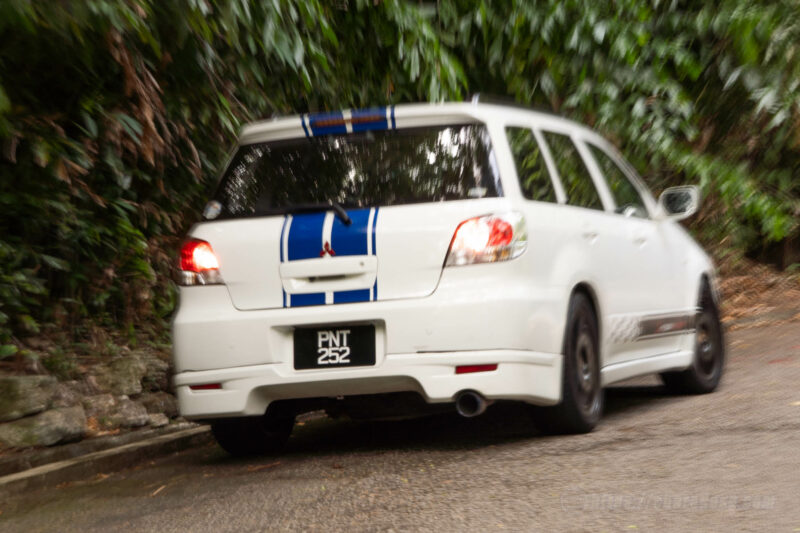
While the 4G63T can be auditory bliss with good aftermarket, the default setup from headers to exhaust is not very unique – a general buzz mostly muffled by the air of the turbocharger. It will roar as it creeps beyond 5,000 RPM, but the car rarely reaches it in auto.
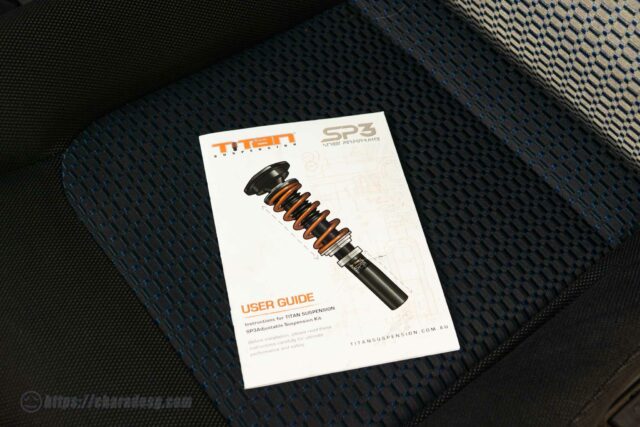
On its original shocks, the car was stiff but this unit has since been changed to TITAN SP3 coilovers, adjusted for a soft but performance setting.
Front clearance is heavily impacted especially with the front RALLIART lip, in addition to rear lip and muffler also no stranger to scrapes. While the stance is good in photos, the setup and condition of this exact test car is strictly not the best to compare with. Worn suspension bushings, arms, soft setup and economy tyres (Toyo Proxes CR1) does not make this Airtrek the best for review, but if its good when bad, then it might be great when perfect?
Mechanical grip is not bad for an SUV, able to keep pace with lighter manual cars in the twisties and then catch up on the straights. The turn-in is direct without dangerous levels of body roll, even with the soft setup of the coilovers. But the Airtrek is no chuck-Norris; weighing in at 1,520 kilograms with a wide turning radius, it doesn’t have the body to fling itself into a bend. It isn’t right, but it does feel right.
It will inevitably understeer due to its four-wheel drive setup, but driver confidence remains planted with some feedback from the ground and low likelihood to step the rear out. The steering ratio is a huge downside – having a steering radius as wide as a bus that not only requires shuffling of the wheel in spirited or calm commutes, but also requires three-point turns for u-turns.
The seats have sufficient bolster that hold the driver in place, so fancy semi bucket seats are not required. The overall ergonomics does match the prowess of the Airtrek Turbo, where the chassis does prove firm. This unit just doesn’t capture the best state that the Airtrek can be, but only held back by this car’s undercarriage condition and tyres.
The transmission is does its job well enough half the time, the other half not enough. Its lurchy, struggles to find a right gear and is a guaranteed dent in performance. The gear ratios are long, hurting acceleration and only really eases the pain of its fuel consumption slightly.
The tiptronic manual is fine, allowing you to row your own gears with a second in delay. It has a logic to only allow upshifts at a certain speed and will otherwise putter about at 2,000 RPM. Funny would be the “reversed” controls – push up for upshift and vice versa – opposite of sequential gearboxes.
In spite of having a 60 litre fuel tank, the Airtrek Turbo in congested city streets does a poor average of 11 kilometres per litre. Even at highway speeds, the Airtrek is still on boost, so expressway trips won’t differ too much from city crawls. Given its weight, without heavy use of carbon fiber and interior stripping, that fuel consumption is probably going to stick.
So its all quite flawed as a package. The merits seem to boil down to remarkable handling capability as an SUV and its overall comfort. But even this pro is wittled down by the fuel economy and whacking requirement.
Airy proposition
The Airtrek Turbo in Malaysia is currently on a noticeable depreciation curve, having dropped by roughly RM3,000 in the past few years and now stagnating around the RM21,000 price range.
If you want a cheap project that can spar with cars in the RM50,000 and up range, the Airtrek Turbo can be a value proposition with supporting modifications and a heavy foot (in working conditon). The uneasy caveat is parts are now extremely scarce in recent years – sourcing components are turning to an “ask and receive” situation.
Additionally, the gearbox is a weak point that is both fragile and generally unreliable, which this unit is on its second gearbox which also needs a rebuild – or a manual conversion.
The overall consensus is as a package, it can appeal to both ends of the family needs – dad’s street-cred and mom’s maternal lifestyle – but fuel and reliability remain as huge advisories. The parts are scarce and the consumption spills, but this is one car that in contemporary speak was an attainable proposition as a watered down Lancer Evolution – a budget all-wheel drive performance car. It just so happens to be better a family runabout – disregarding fuel bills.
Specs for this Mitsubishi Airtrek Turbo:
Price (for Malaysian market at time of writing): RM18,000 – RM50,000
Engine: 2-litre turbocharged four-cylinder (4G63T)
Transmission: INVECS-II CVT with manual 5-speed
Power figures: 237 horsepower, 343Nm torque
0-100km/h: 6.5s
Top speed: 200km/h
Consumption (official figures): 11.1 kilometres per litre
Drivetrain: All-wheel drive
Weight: 1,520 kilograms
Engine capacity: 1,997cc
Dimensions (Length, Width, Height): 4,465mm, 1,750, 1,540
Wheelbase: 2,625mm
Seats: 4
Cargo capacity: 402 litres, 1,049 litres (rear seats folded)
~Efini
Gallery:
Read more: MotorGala: Mitsubishi Airtrek Turbo-R
Consider subscribing to our website! Most of our posts are uploaded before they reach our social medias, so subsribing means you get to see posts when they are released, and some that may not be featured. Cheers!
Subscribe to our newsletter!