

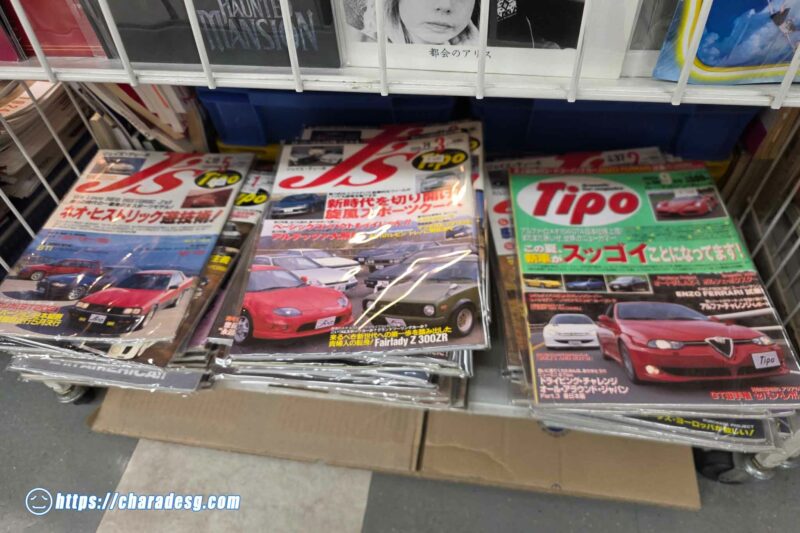
Basic recommendations for old-school Japanese automotive literature.
At my time in Japan, many friends had expressed interest with these automotive magazines – particularly due to their prices listed. Indeed they are cheap, and I would vouch for a book or two to be picked up for those who interested in general automotive literacy.
Most of the abovementioned had seen and expressed interest in my Instagram story about J’s Tipo magazines and their comparably cheap prices (to what’s available back in SG). I will provide a little more than Tipo, with three highlighted publications that I think are worthwhile to source (including Tipo).
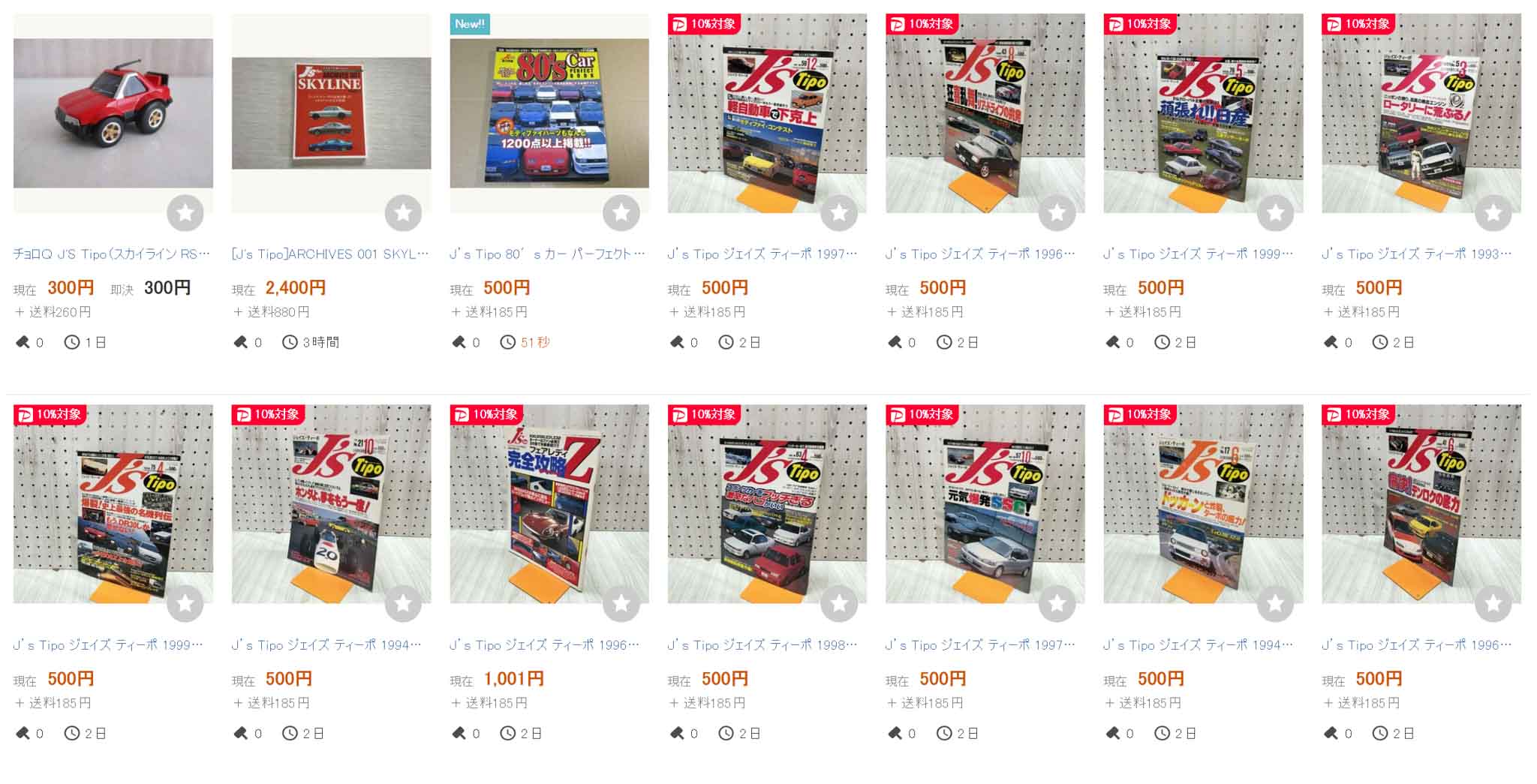
J’s Tipo & Tipo
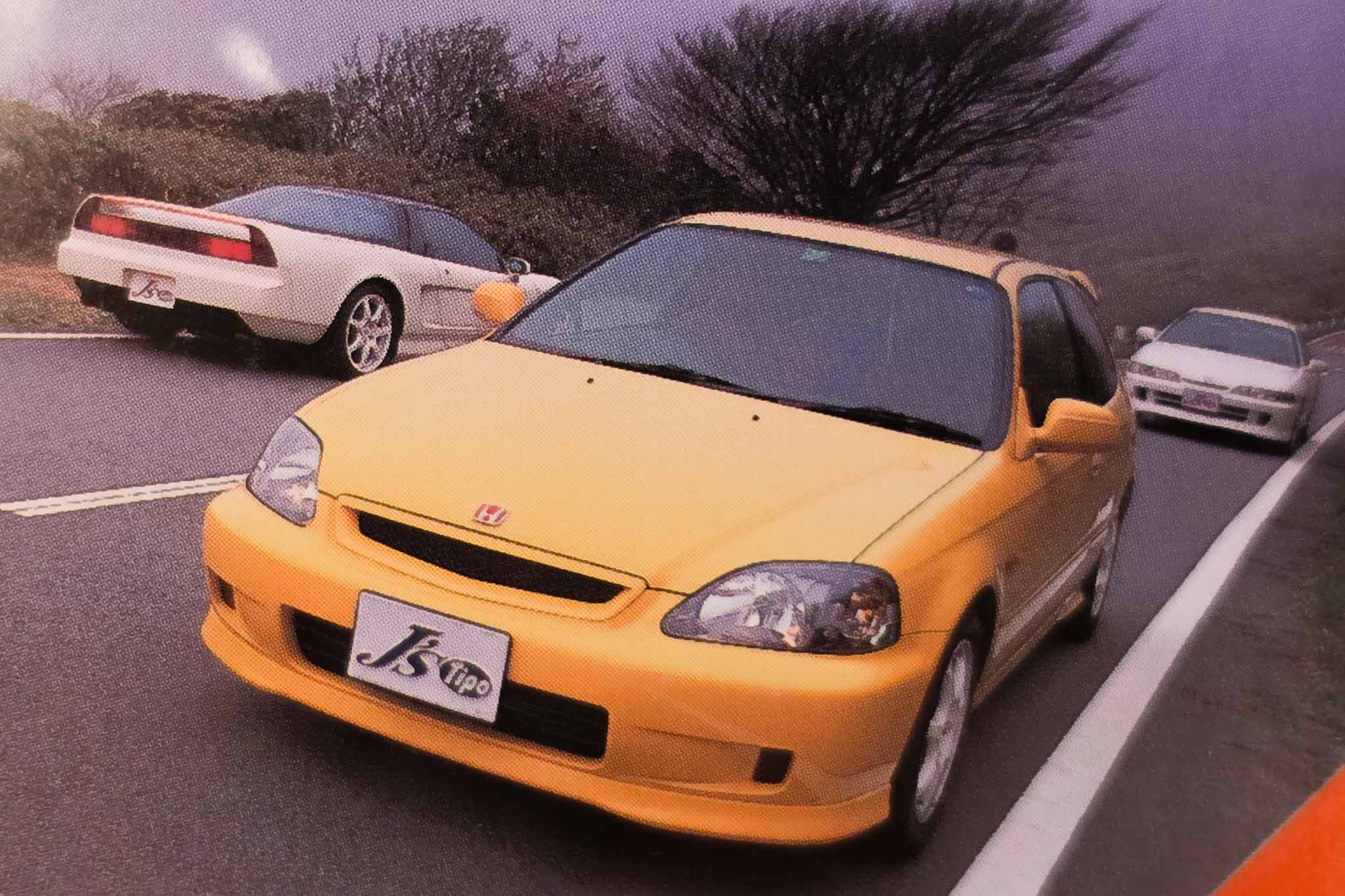
J’s Tipo first started in July of 1992, marketed to feature both old and contemporary Japanese cars (hence the “J’s” in the name). Publication was a bimonthly affair when it was launched and when it was discontinued to be a web-hosted publication, but became monthly for a period of time. J’s Tipo lived until its 180th issue, where its physical magazines would be canned in favor for website publications.
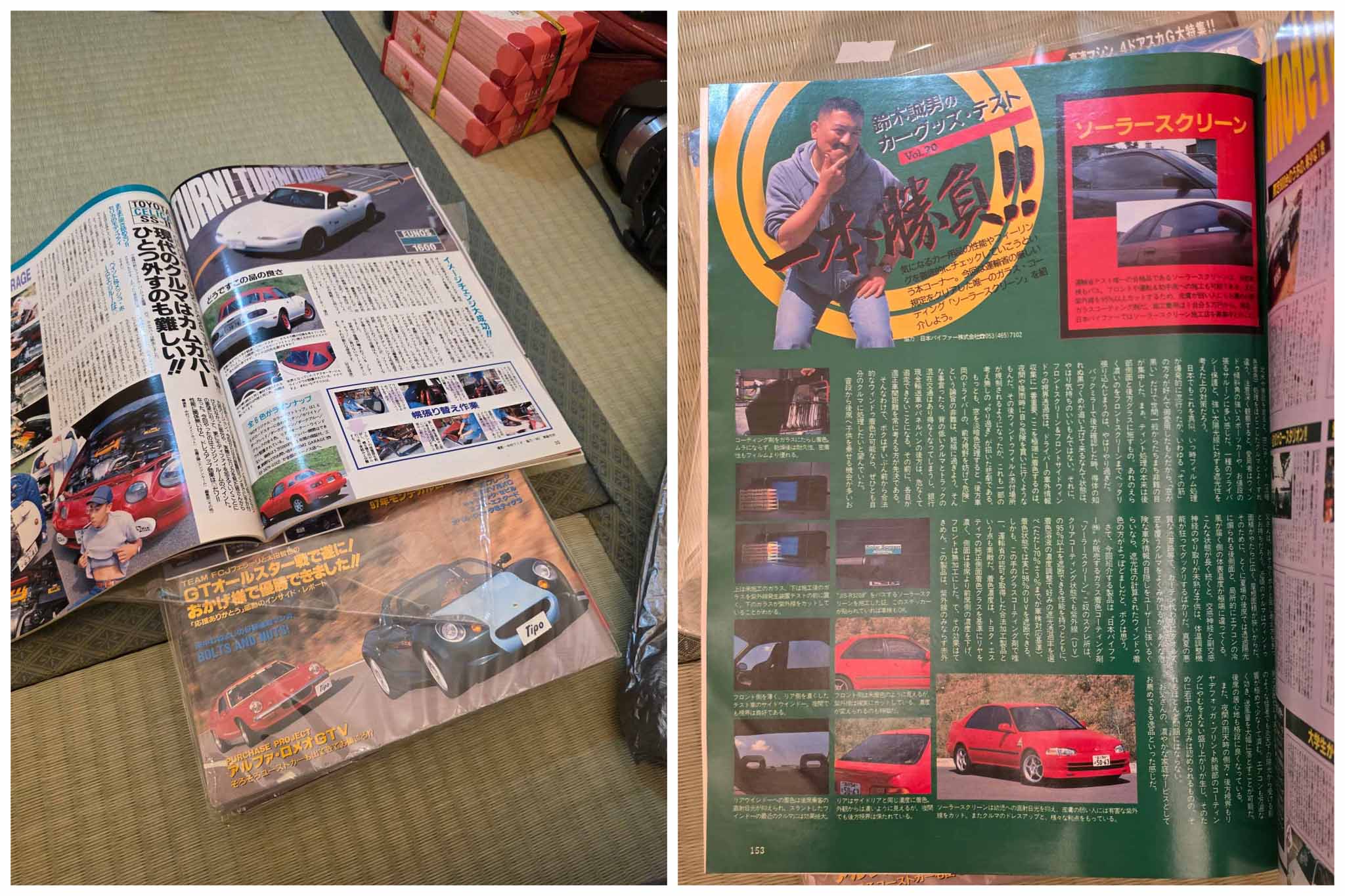
Tipo is the original magazine that J’s spun off from, being much broader in its coverage of car makes instead of a Japanese-centric coverage. This is seen best in its covers, where many of the entries include many European brands – most common being Lotus or other makes. They still exist as a physical magazine, with their 405th issue out in April 2026.
Both titles feature roadtests, history writeups, owner interviews and more. Stock and modified examples are featured often.
These magazines are on the cheaper end of physical literature, available physically and online at around 200¥ and beyond 1,000¥.
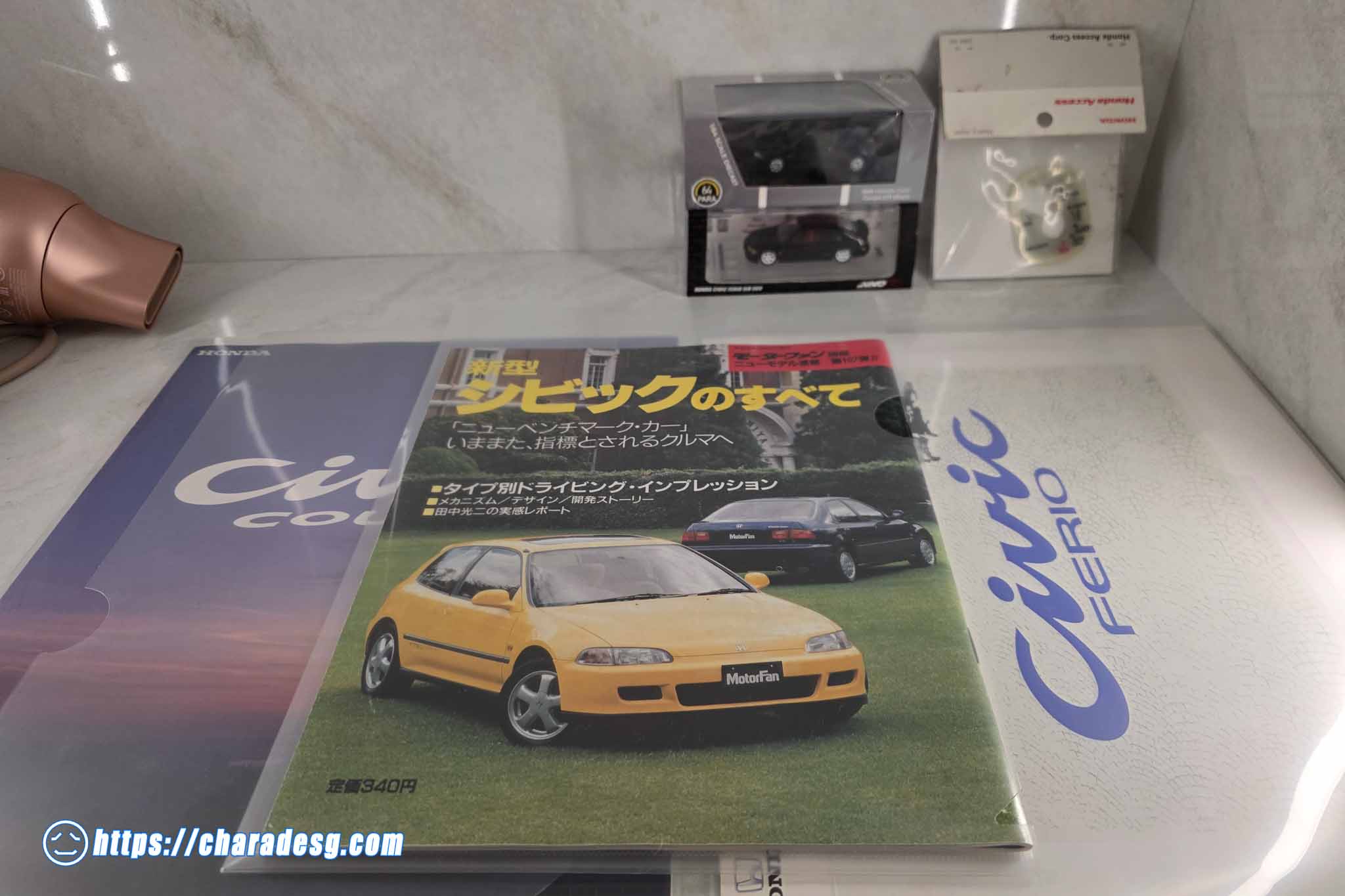
モーターファン別冊 ニューモデル速報 (MotorFan New Model Series)
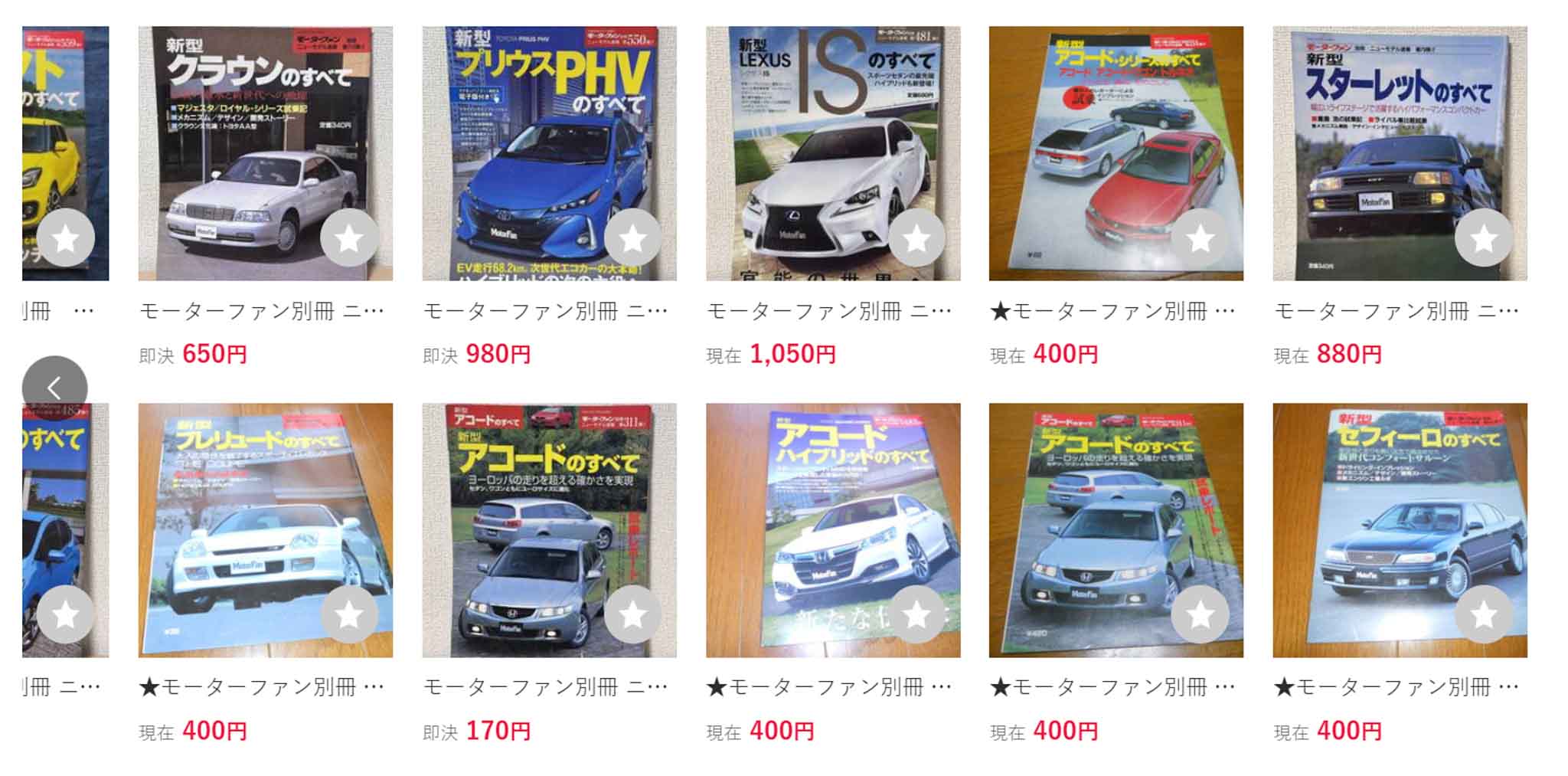
MotorFan New Model Series is a bookazine (blend of a book and magazine) dedicating each entry to a specific contemporary car model, usually released shortly after the model’s launch. These have extensive literature, easily being over a hundred pages long in trivia.
Provided usually are full specifications covering mechanicals, weight, suspension, design, ideation and more. Leaning onto ideation, engineers are interviewed about the design, philosophy and more about each model.
It is an all-in-one, also covering most available variants offered (at initial launch), illustrations, roadtests, comparisons between other rivals and snippets of official brochures for some entries.
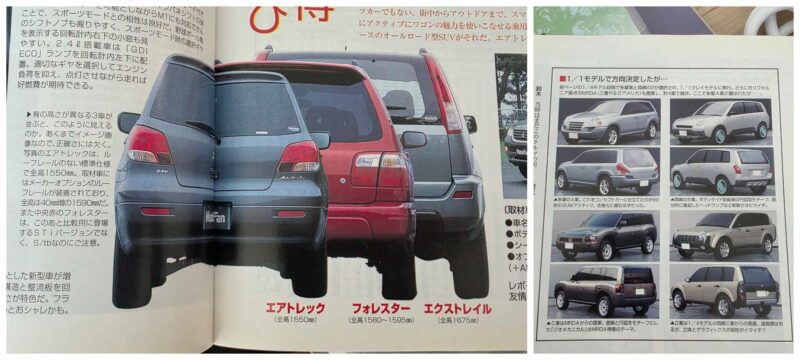
These for one have been a direct source for me to find approximate emission stickers for the Airtrek.
Prices for these MotorFan magazines fluctuate heavily due to their focus on specific models – making them within identical territory as official catalogs. They are a bit of a collectors item for owners, so the older books do fetch high prices in certain situations.
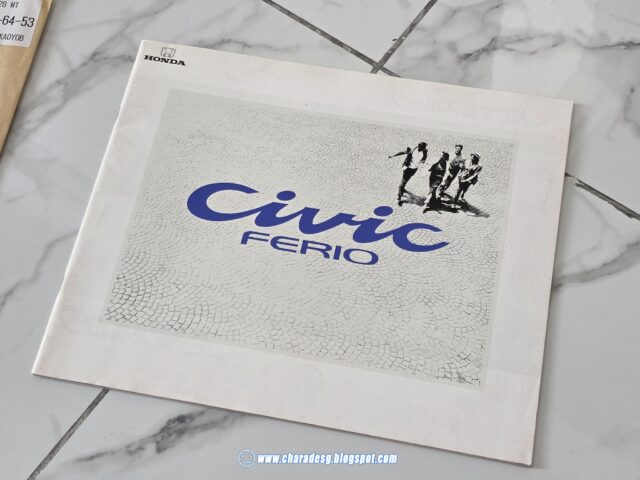
For example, a MotorFan entry for the Mitsubishi Airtrek normally seeks around 400¥, but another entry for the Honda Civic EG-generation can be bidded up to 2,500¥. As such, prices are very spread out.
This series of MotorFan is still ongoing, covering cars like the currently-new Honda Civic Type R (FL5), although their older entries remain more popular within western audiences (and owners) for its diversity.
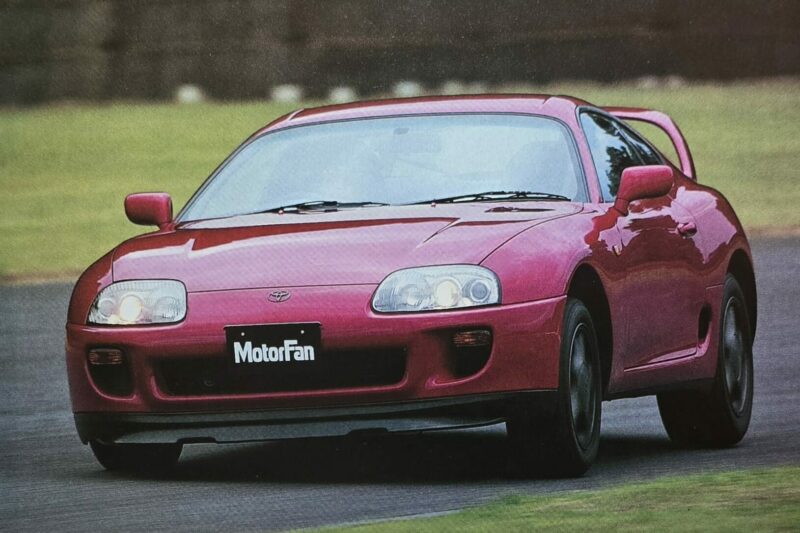
Hyper Rev
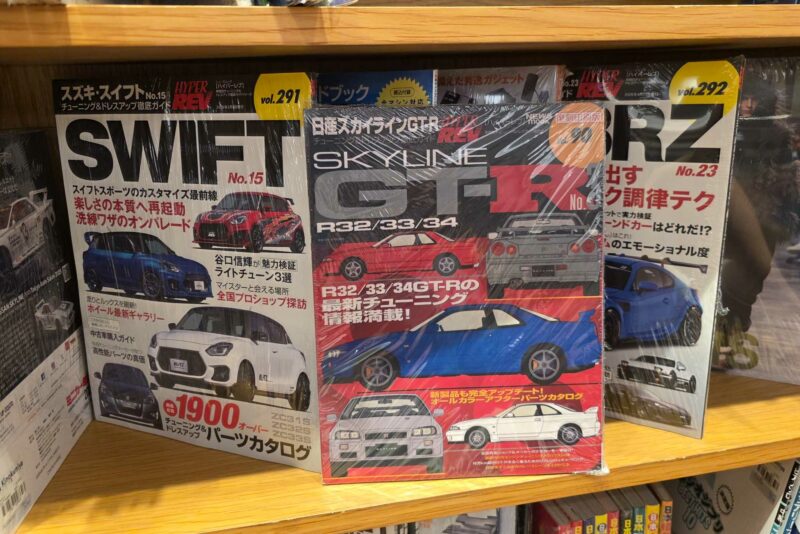
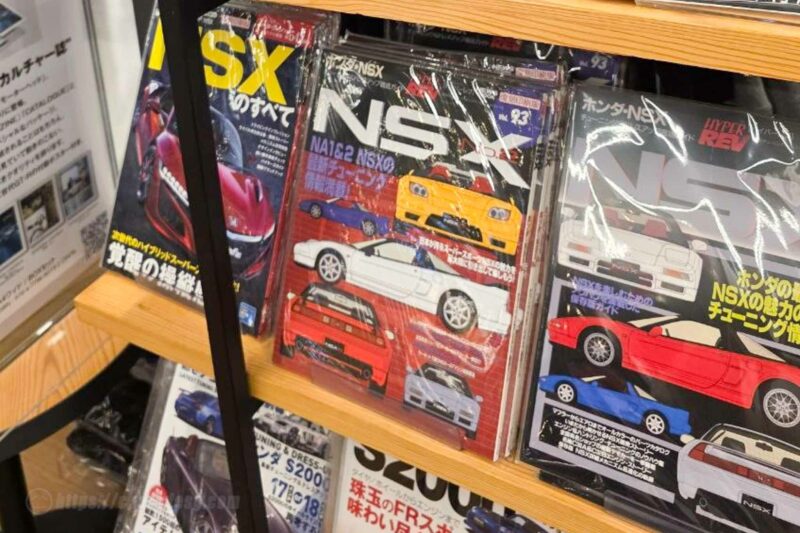
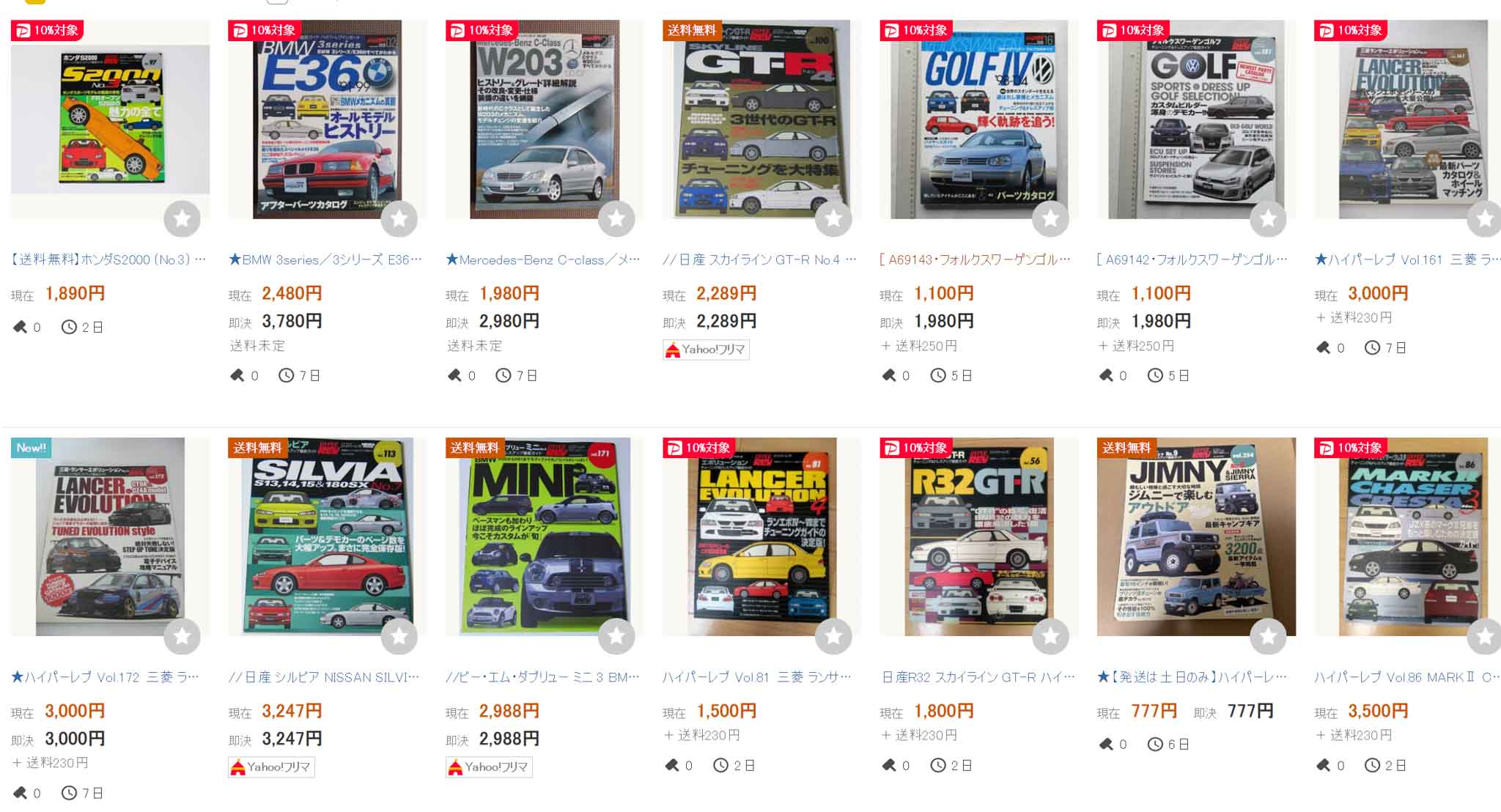
Hyper Rev is another bookazine and practically a bible for customization and tuning. Self-described as a tuning and dress-up guide, every issue focuses on a specific model of car primarily from Japanese makes. However, there is a sub-series “Hyper Rev Imports” that focus on European and Italian makes.
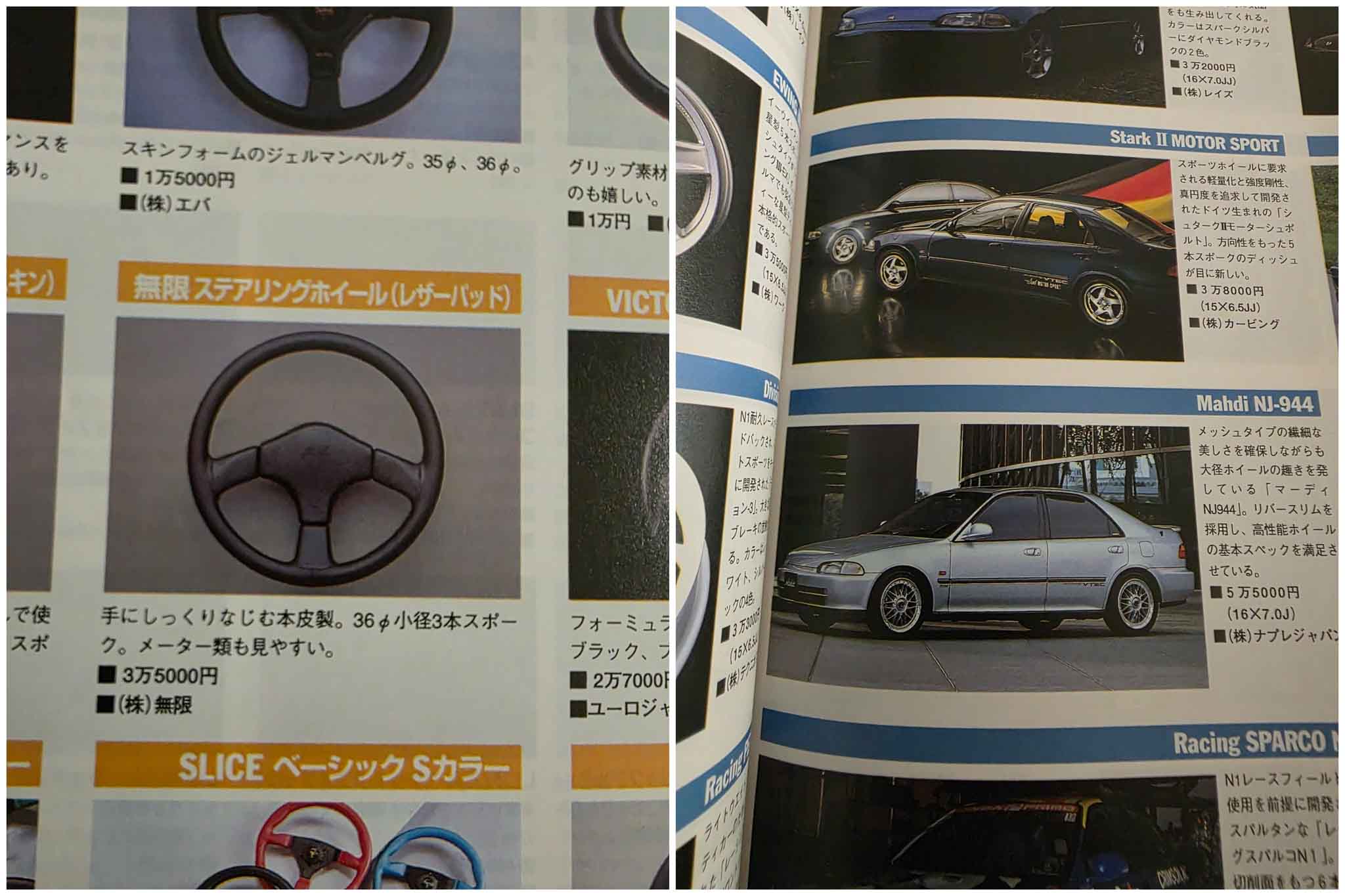
Features of certain builds and parts lists are always included, showcasing popular shops, parts and “visioning” with photo examples for some modifications like wheels. Also included are tuning guides for fitment and engine configurations.
Hyper Rev still covers new cars, with models like the currently-new Suzuki Jimny, Type R and GR Yaris to name a few contemporaries.
Prices for Hyper-Rev magazines are also very model-dependent, but start at a higher price online for around 1,000¥. There are certain entries that may be auctioned for up to 4,000¥ (Civic ones hurt the soul). There are reprints of these magazines that are sold new in bookstores domestically and overseas (check your local Kinokuniya outlet) – they should not have content changes – not that I know of.

Purchasing
Well, you purchase physically, of course.
Let’s say you can’t do that. Understandable; I can’t either LOL, but there is a workaround via proxy purchase that should cost less than a plane ticket unless you want a library’s worth of magazines.
Yahoo Auctions and I believe some bookstores have online stores that can be accessed through proxy purchase companies and bought from to be delivered to you. The only catch is bad delivery (possible) and eye-watering shipping costs (guaranteed). The magazines themselves are cheap, the process for you to read it is not. I have been using Doorzo personally, but there should be other companies available for the same service with their respective fees or shipping costs.
Conclusion
Again, this is scratching the surface where Japanese magazines are concerned. There are a lot more magazines from other publications, both covering new and old cars, specific makes or specific models – but it is a brief summary for those who want to know what they can look for domestically.
~Efini
Read more: Fuel for Thought: Physical car materials are worthwhile memorabillia





Yo you should add Option magazine too